
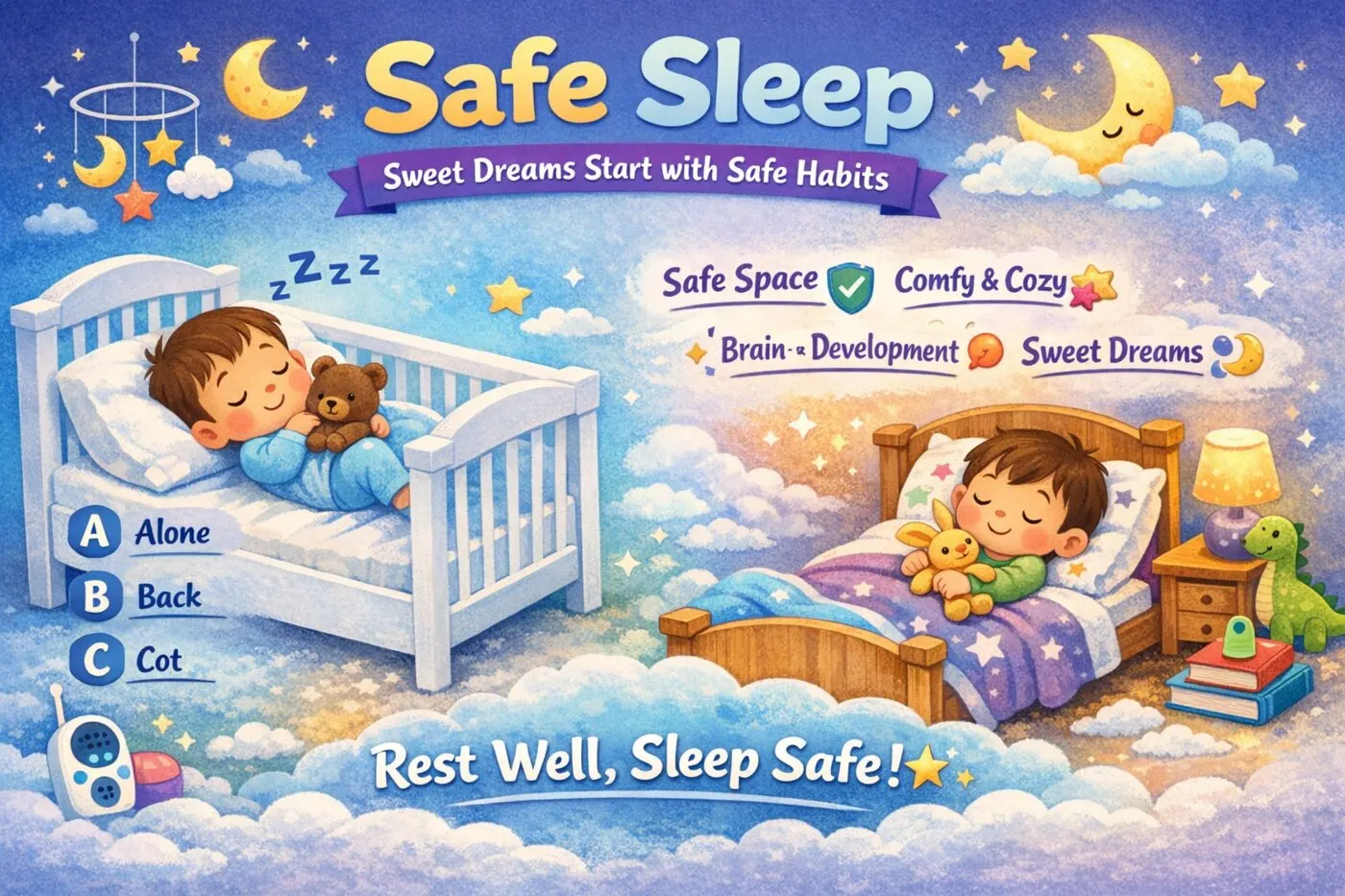
Safe Sleep: Sweet Dreams Start with Safe Habits
Sleep is a big part of a child's growth, wellbeing and development, from babies and toddlers to preschoolers and beyond. At nursery and at home, restful sleep helps children recharge, learn and feel their best.
Creating safe sleep habits is about more than bedtime routines. It is about making sure every child has a secure, comfortable environment to rest, wherever they sleep.
Safe Sleep Starts with a Safe Space
Whether your child is sleeping in a cot, a toddler bed, on a sleep mat, or resting during quiet time, their sleep space should be simple, safe and comfortable.
A "less is more" approach works best:
- ✔ A firm, flat sleep surface
- ✔ Age appropriate bedding
- ✔ A calm, comfortable sleep environment
For younger children, keep sleep spaces clear of unnecessary items such as loose blankets, pillows, toys, or anything that could interfere with safe sleep.
A clear sleep space is a safer sleep space.
Comfort Matters Too
Safe sleep is also about helping children stay comfortable through the night and during naps.
At home, this can mean making sure children are:
- Dressed appropriately for sleep
- Not too hot or too cold
- Sleeping in a calm, well ventilated room
- Following a routine that supports rest
Comfortable children tend to sleep better - and well rested children often wake ready for the day ahead.
Back to Basics for Babies
For our youngest sleepers, the ABCs of safe sleep are still key:
Alone
Babies should sleep in their own sleep space.
Back
Always place babies on their back for every sleep.
Cot
Babies under one year should sleep in a safety approved cot with a firm, flat mattress.
These simple habits can help support safer infant sleep both at nursery and at home.
Safe Sleep for Toddlers and Older Children
Safe sleep does not stop as children grow.
For toddlers and older children, safe rest can include:
- Safe beds or sleep spaces suited to their age
- Clear pathways around beds and sleep areas
- Bedding used appropriately
- Sleep spaces free from hazards
- Ongoing supervision where needed
As children become more independent, safe sleep often becomes about creating a secure environment and building good habits.
Supervision and Awareness Matter
While children sleep, regular checks and awareness remain important, especially for younger children.
At home, this might look like:
- Checking sleeping children are comfortable
- Ensuring blankets have not covered faces
- Making sure younger children remain in safe sleeping positions
- Keeping monitor checks part of your routine, if used
At Coastal Childcare, this might look like:
- Regularly checking sleeping children throughout rest times to support their comfort and wellbeing
- Ensuring sleep spaces remain safe, clear and suitable for rest at all times
- Monitoring the sleep environment, including maintaining a comfortable room temperature while children sleep
This helps us create a calm, secure space where children can rest safely and comfortably during their time at nursery.
Sleep time is still care time.
Building Healthy Sleep Habits at Home
Safe sleep and healthy sleep go hand in hand.
Simple routines can help children feel ready for rest:
- Consistent bedtimes
- Calm wind down time before sleep
- Stories, cuddles or quiet activities
- Comfort items, where appropriate
- Screens switched off before bedtime
These routines can support emotional wellbeing, concentration and better sleep for the whole family.
Sweet Dreams for Every Age
From babies having their morning nap to preschoolers recharging after busy days, sleep is an important part of every child's wellbeing.
At Coastal Childcare, we believe safe sleep is something families and caregivers can work on together, helping children rest comfortably, safely and with the support they need both at nursery and at home.
We follow the latest guidance from the Department for Education on safer sleep practices, alongside advice from The Lullaby Trust.